- Architektura
- Art in Context
- Grafika 1
- Grafika 2
- Intermédia 1
- Intermédia 2
- Intermédia 3
- Kresba
- Malba 1
- Malba 2
- Malba 3
- Malba 4
- Nová média 1
- Nová média 2
- Restaurování malby
- Restaurování sochy
- Socha 1
- Socha 2
- Figurální socha
- Intermédia
- Kresba / grafika
- Malířství
- Sochařství
- 90. léta
- abstraktní
- abstraktní symbolika
- absurdita
- aktivismus
- akvarel
- Albánie
- amatérismus
- analogová fotografie
- anatomie
- animace
- antikapitalismus
- antropologie
- apropriace
- archetypy
- architektura
- archiv
- archivace
- archivy
- artivismus
- artterapie
- asambláž
- audioprocházky
- autoportrét
- a-národnost
- baroko
- barva
- Benátské bienále
- bezdomovectví
- bezhlasost
- bez finanční hodnoty
- bez kategorie
- bioart
- biomorfismus
- bolest
- Bosna a Hercegovina
- bourec morušový
- budoucnost
- bujný
- cenzura
- ceremoniální
- cesta
- cestování
- cesty
- čarodějnictví
- čas
- černá a bílá
- Černá Hora
- černota
- český informel
- čichový
- činy
- člověk
- dadaismus
- dekolonizace
- dekonstrukce
- dekorace
- deník
- destrukce
- dědictví
- dějiny
- dějiny umění
- děti
- dětská zkušenost
- dětství
- digitální
- digitální kolonialita
- digitální malba
- digitální věk
- disidentské umění
- divadlo
- divácký zážitek
- dokument
- domácnost
- domov
- dotek
- dramatické psaní
- duchovní tvorba
- duo
- duše
- duševní zdraví
- ekofeminismus
- ekologické katastrofy
- ekologie
- ekosociální
- emancipace
- emoční stavy
- environment
- environmentální problémy
- etnografie
- existence
- existenční
- existenční problémy
- experiment
- experimentální
- EXPO 58
- fakt
- fáma
- feminismus
- fenomenologie
- figurativní
- fikce
- film
- film
- filozofie
- fixace
- fluidní
- fotografické techniky
- fotografie
- fotokniha
- fotomontáž
- fotomontáž
- fotorealismus
- freska
- frotážní archeografie
- fyzický
- galerie
- gender
- genderová nerovnost
- genderová polarita
- genderová zkušenost
- genderové role
- generace
- generace 1909
- genesis
- gentrifikace
- geometrie
- gesto
- glamour
- governmentalita
- grafika
- grafika
- happening
- haptická socha
- haptické vnímání
- hedvábí
- herectví
- historie
- hlas
- hledání sebe sama
- hlína
- hnutí
- hodnota umění
- Holocaust
- hory
- hospodyňka
- hra
- hranice
- hravý
- hrůza
- hudba
- hudební představení
- humor
- choreografie
- identita
- ideologie
- ideologie
- ikonografie
- iluminace
- ilustrace
- imaginární
- imigrace
- individuální paměť
- instalace
- instalace
- instalační umění
- institucionální kritika
- interakce
- interaktivní
- interdisciplinární
- interiér
- intermédia
- internetový aktivismus
- interpersonální vztahy
- interpretace
- interpretace diváka
- intimita
- intimní
- intimní příběhy
- intuice
- iracionalita
- ironie
- islám
- izolace
- jazyk
- jedinec
- jednoduchost
- jednoduchý materiál
- jednorožci
- její příběh
- jinakost
- jiskry
- jídlo
- jóga
- Jugoslávie
- karaoke
- karma
- každodenní
- každodenní život
- kámen
- keramika
- kinetická instalace
- kinetické umění
- klid
- klidný život
- kolaborativní praktiky
- koláž
- kolektivita
- kolektivní paměť
- kolektivní praxe
- kolektivní práce
- kolonialismus
- komentář
- komunikace
- komunismus
- komunity
- konceptuální umění
- konflikt na Blízkém východě
- konopí
- kontext
- konzumerismus
- kosmetický průmysl
- Kosovo
- kostýmy
- krajina
- krása
- kresba
- kritické umění
- kruh
- kultura znásilnění
- kulturní paměť
- kulturní tradice
- kurátorství
- květinový
- kyberprostor
- kýč
- land art
- láska
- látka
- legendy
- len
- lesbické umění
- lidská bytost
- lidská existence
- lidská práva
- lidské a nelidské
- lidskost
- liminální zkušenosti
- lingvistika
- linie
- literatura
- luxus
- Maďarsko
- malá gesta
- malba
- malba jako hmota
- malba rozšířená do prostorových kontextů
- malba s tvrdými hranami
- malé akce
- manipulace
- marginalizace
- marginalizovaný
- marginalizovaný
- maska
- materiál
- materiální zkušenost
- materiálnost
- materiálnost obrazů
- mateřství
- mateřství
- mánie
- mediace
- mediální umění
- meditace
- menšina
- metamorfóza
- mezigenerační spolupráce
- mezigenerační trauma
- městská mafie
- městské plánování
- městské změny
- městský
- městský aktivismus
- městský prostor
- migrace
- mikropolitika
- militarismus
- mimořádné objekty
- minimalismus
- minulost
- mitholský spirituál
- místní komunita
- moc
- mocenské vztahy
- modernismus
- momentka
- monochromatický
- monotypie
- montáž
- monumentální
- monumentální propaganda
- morálka
- motion picture
- mozaika
- móda
- mramor
- mřížka
- multietnický
- multikulturalismus
- multimédia
- muzikál
- múza
- mytologie
- mýty
- nacionalismus
- nahé tělo
- nail art
- naivní umění
- nalezené objekty
- nalezený
- narativní sochařství
- naslouchání
- nativní materiál
- náboženství
- národní identita
- násilí
- nástěnná malba
- nástěnné malby
- nástroje útlaku
- nebinární
- nedokonalost
- negativní prostor
- nehmotné praktiky
- nehmotné umění
- nekonvenční
- nelidský
- nemoc
- neoavantgarda
- neoficiální umělecká scéna
- neoficiální umění
- neokonceptuální
- nerovnosti
- nescénický folklór
- nespravedlnost
- netolerance
- neumění
- nevědomí
- nevědomí
- nevědomost
- neviditelná práce
- nevyřčené příběhy
- new age
- nomádi
- nomádský monument
- nová figurace
- nová média
- nový materialismus
- obchod s lidmi
- objekt
- objektivita
- objekty
- oblečení
- obraz
- obyčejný
- odcizení
- oděvy
- odlitek těla
- odolnost
- odpad
- odpor
- odpudivý
- omyl
- onirism
- opakování
- opera
- opuštěná místa
- orální historie
- organická abstrakce
- organický
- osamělost
- osobní
- osobní historie
- osobní mytologie
- osobní příběhy
- osobní zkušenost
- osobnosti
- osvobození od umění
- památník
- paměť
- pandemie
- papír
- paradokumenty
- parafráze
- parodie
- participace
- participativní
- participativní projekty
- Paříž
- patchwork
- patriarchát
- performace
- performativní malba
- performativní sochy
- performativní umění
- perforovaný bod
- periferie
- péče
- péče o sebe
- péče o sebe
- pin
- pirátství
- pískovec
- plastelína
- plech
- pletení
- podpůrná skupina
- podvědomí
- podvratný
- poetika
- poezie
- pohraničí
- pohyblivé obrazy
- pohyblivý
- pochopení
- polaroid
- politické systémy
- politický
- politika
- politika identity
- politika paměti
- politika těla
- polyfonie
- pomalý
- pomíjivost
- pomíjivost
- pomíjivost
- popart
- popkultura
- populismus
- pop art
- porno
- portrét
- portréty
- postantropocentrický
- postdigitální
- postfeminismus
- postfotografie
- posthumanismus
- postinternet
- postižení
- postkoloniální
- postkomunismus
- postkonfliktní
- postkybernetický feminismus
- postmoderna
- postperformance
- postpravda
- postsovětský
- postsurrealismus
- potěšení
- pouliční umění
- pravda
- praxe
- práce
- práce s kovem
- práce v domácnosti
- práva LGBT
- práva žen
- precese
- prekarita
- privilegium
- PRL
- proces
- produkce znalostí
- projekce
- propojená historie
- prostor
- protest
- proti válce
- provincie
- provokace
- próza
- průkopnický
- průnik
- pryskyřice
- přátelství
- přechod
- přechodná Makedonie
- přechodný stav
- přeživší
- přitažlivost smrti
- příběh
- příroda
- přírodní
- přírodní materiály
- přírodní vědy
- přítomnost
- psaní
- psyché
- psychoanalýza
- punk
- queer
- radikální
- rasismus
- rádio
- realismus
- realita
- reálný
- rebelie
- recyklace
- redukce
- reduktivní
- reprezentace
- reprezentace žen
- revoluce
- re-enactment
- rituál
- rituální
- rodina
- rodinné příběhy
- rolnická kultura
- romská kultura
- romské umění
- rostlinný
- rozmanitost
- ruiny
- růžový
- řeky
- řemeslo
- řešení
- sakrální
- samizdat
- samota
- scenárista
- scénografie
- scénový design
- sebeidentifikace
- sebeobjevování
- sebeobraz
- sebepoznání
- sebereferenciální
- sebeuvědomění
- sebevzdělávání
- segregace
- sekundární
- selfie feminismus
- sen
- sesterstvo
- sety
- Severní Makedonie
- sexualita
- sémiotika
- série
- site-specific
- sklo
- skvrna
- slovanská mytologie
- smrt
- smyslnost
- smyslová zkušenost
- sny
- socialismus
- socialistický realismus
- socialistický režim
- sociálně angažované umění
- sociální
- sociální angažovanost
- sociální architektura
- sociální kontext
- sociální kritika
- sociální média
- sociální potenciál umění
- sociální problémy
- sociální propaganda
- sociální realismus
- sociální senzibilizace
- sociální změna
- sociologie
- socrealismus
- sochař
- sochařství
- solidarita
- soukromí
- sounáležitost
- sovětský
- spekulativní design
- spiritualita
- spirituální
- společenské postavení žen
- společensko-politický
- společné statky
- společnost
- spolupráce
- Srbsko
- stárnutí
- stávka žen
- STEM
- stereotyp
- stopa
- strach
- strategie přežití
- struktura
- struktura v malbě
- subkultury
- surrealismus
- svatí
- světlo
- svoboda
- svoboda projevu
- svobodné myšlení
- symbolismus
- symboly
- šifrování
- šití
- štěstí
- Švédsko
- tabu
- taktická média
- tandem
- tanec
- tapiserie
- technologický vývoj
- terakota
- terapie
- text
- textil
- textilní pracovníci
- textilní umění
- textura
- texty písní
- text jako umění
- tělo
- tkaní
- tlak
- touha
- tradice
- tradiční ženské role
- transcendence
- transdisciplinární
- transformace
- transkulturalita
- transparentnost
- trauma
- trh s uměním
- třída
- turpismus
- tužka
- tvář
- typografie
- učebnice
- Ukrajina
- umělecká autorita
- umělecká intervence
- umělecká zodpovědnost
- umělecký systém
- umělecký tisk
- umělecký výzkum
- umělecký výzkumník
- umělec ve společnosti
- umělé
- umění a teorie
- umění a věda
- umlčené dějiny
- undergroundová hudba
- univerzální problémy
- urbanismus
- utilitaristický
- utopie
- uvědomění
- uzdravování
- uzdravující vzpomínka
- uznání žen
- užité umění
- úleva
- únava
- útlak
- úzkost
- válka
- vázy
- velký formát
- veřejná sféra
- veřejné umění
- veřejný prostor
- věda
- video
- videoart
- videoart
- videoinstalace
- videoperformance
- virtuální
- virtuální realita
- vitalismus
- vizuální
- vizuální poezie
- víla
- víra
- vlastenectví
- vnitřní krajiny
- vnitřní obsah
- vnitřní síla
- voda
- Vogue
- VR
- vykořisťování
- vyprávění
- vyprávění příběhů
- vysídlení
- vyšívací jehla
- výpověď
- výraz
- výstava
- výšivka
- výzkum
- výzkum paměti
- vzdělávání
- vzpomínka
- vztahy
- vztahy
- vztahy mezi muži a ženami
- vztah matka-dítě
- vztah muž-žena
- workshop
- xenofobie
- zahradničení
- založený na fotografii
- založený na kontextu
- záhyb
- zátiší
- zbytečné činy
- zdánlivě nesouvisející
- země
- zin
- zlověstný
- znalosti
- znovuobjevení
- znovupoužití
- zpěv
- zpěvník
- zranitelnost
- zrcadla
- ztělesnění
- ztráta
- zvířata
- zvuk
- zvuková instalace
- zvuková krajina
- zvuková poezie
- železo
- žena
- ženská citlivost
- ženská sexualita
- ženské tělo
- ženskost
- ženství
- židovské dědictví
- život
- žurnalistika
Guests 1970 & 2020
2020 • Marcel Fišer and Petr Dub, curators
Miloš Cvach
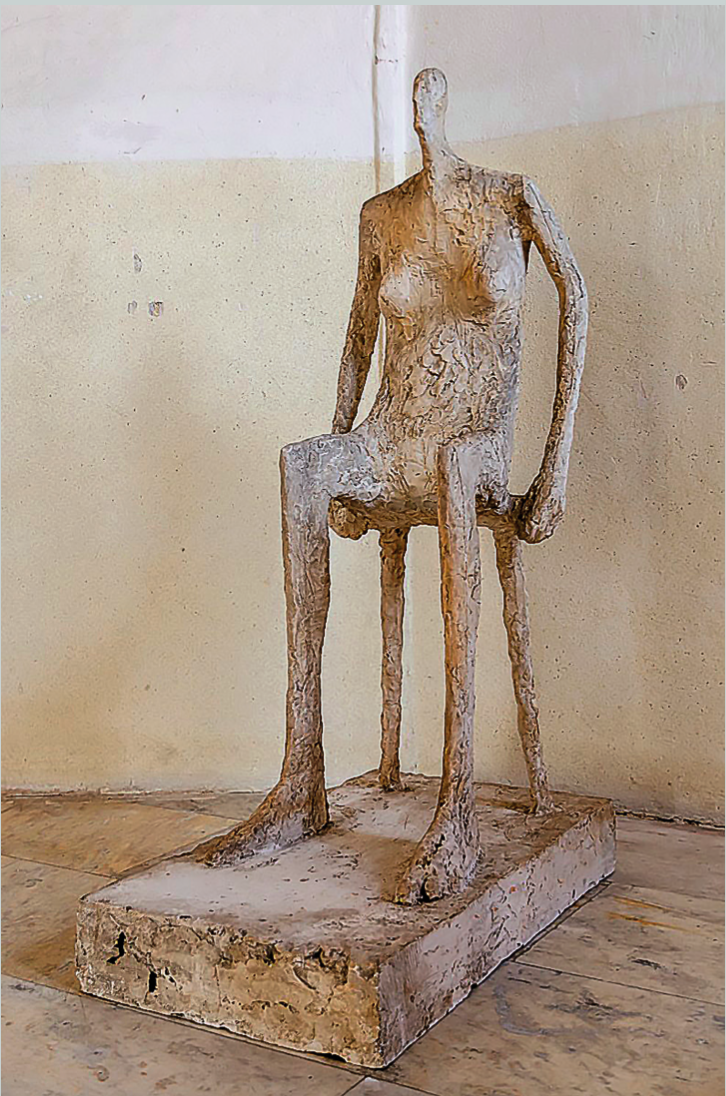
| 1963–1970 | Sculpture (K. Lidický) |
Cvach’s diploma is a self-contained series of sculptures composed of several full figures and a separate head. His heavily stylized bodies take clearly defined positions. They are static, but at the same time evoke a very vital and natural impression. They refer to various forms of the post- war figural sculpture, an artistic trend the artist solved in his work. After leaving for France in 1973, his professional development took a completely different direction. Cvach began producing minimalist objects, first integrated with products of nature and the accidental and later characteristic of smooth, pure, and complex geometric forms.
Michal Gabriel
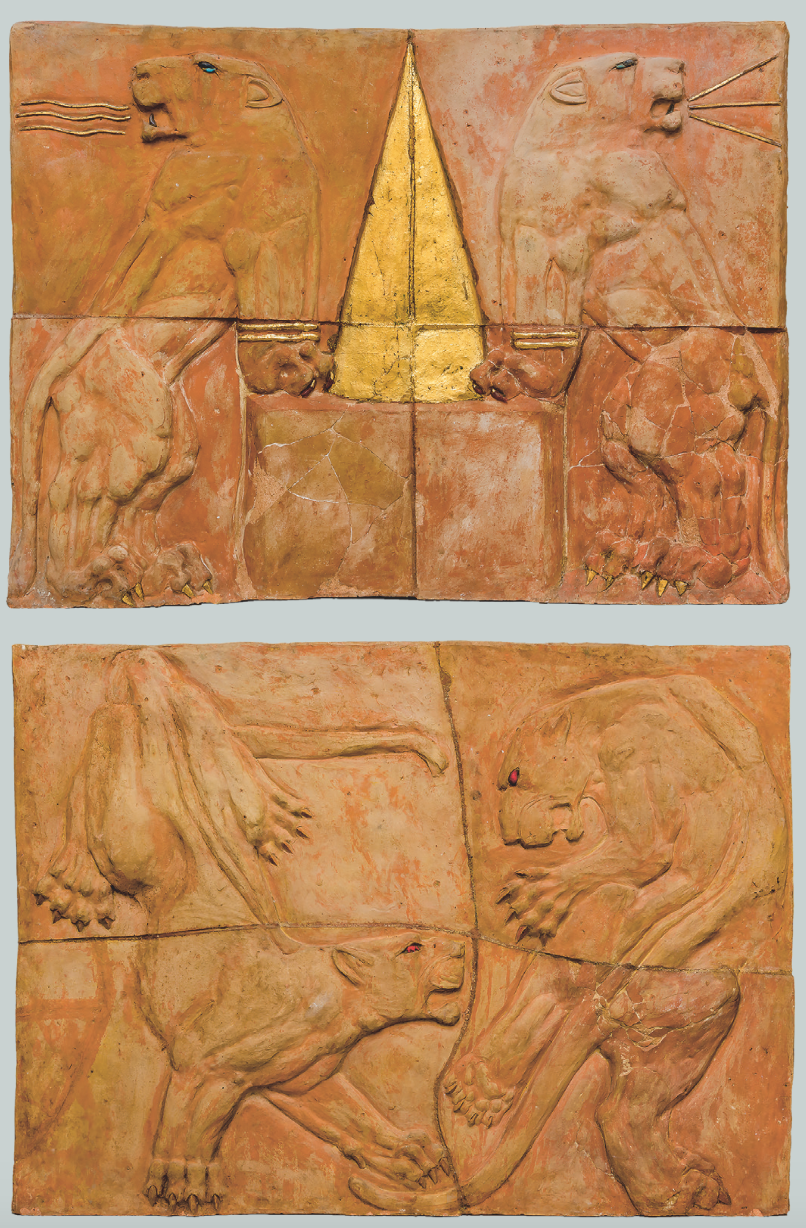
| 1982–1987 | Sculpture (J. Kryštůfek, S. Hanzík, J. Hána) |
Michal Gabriel’s diploma – a series of reliefs for the Prague ZOO feline pavilion – interestingly documents the atmosphere at the Academy as well as the entire art scene in the late 1980s. It was a direct consequence of illegally participating in one of the semi-official students’ exhibitions. As a punishment, Gabriel had to graduate a year earlier. However, this suited him perfectly, and he thus executed the work in a very tight deadline, within less than a month. Al- though it was a task of decora- tive character, the series betrays connection with Gabriel’s oeuvre of that time, when he – in the spirit of post-modern eclecticism – pursued formal and content references to archaic sculpture. The first relief with fighting lions reminds of a Scythian bronze, while the second one is a loose variation of the famous Lion Gate in Mycenae. The artist returned to the subject of animals after 2000, when they became central for his sculpture.
Václav Girsa
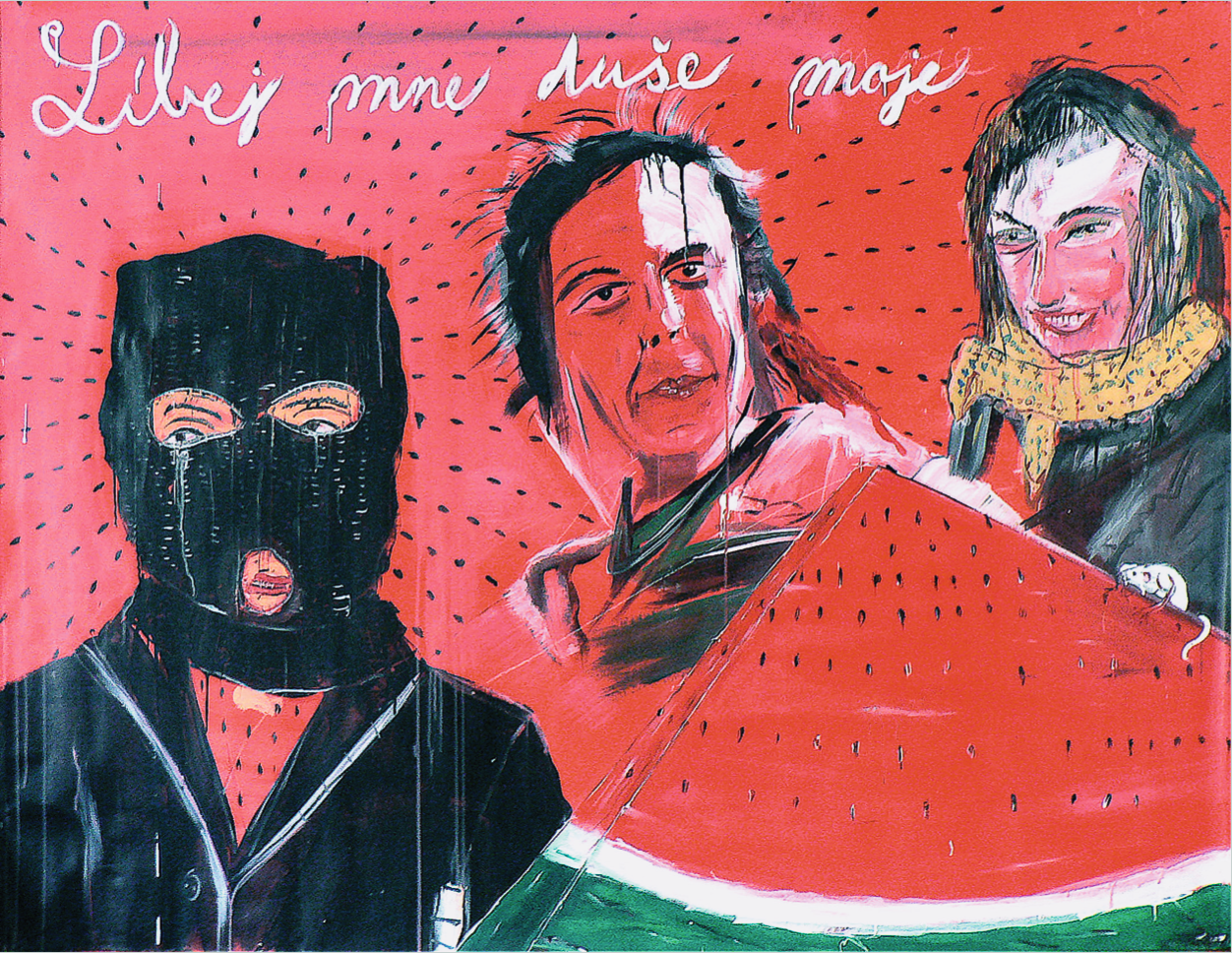
| 2001–2007 | Painting (J. David, V. Skrepl) |
Václav Girsa – a painter and author of objects and installations, but also a distinctive musician – entered the Academy in the late age of thirty-two, when he already was a mature artist professing an original style. He created some of the paintings from his extensive diploma collection with Silvina Arismendi and Alice Hilmarová; however, the presented canvas is his independent work. It displays all the qualities of Girsa’s peculiar oeuvre: the punk explosiveness, fondness of textual messages, and drawing character, along with a sense of color expression. The painting was selected as a sym- bol of the exhibition since it fulfills its concept in no less than two ways – the author is one of the “guests” and, at the same time, a crucial figure of the graduation exhibition of Lukáš Hofman.
Jakub Hošek
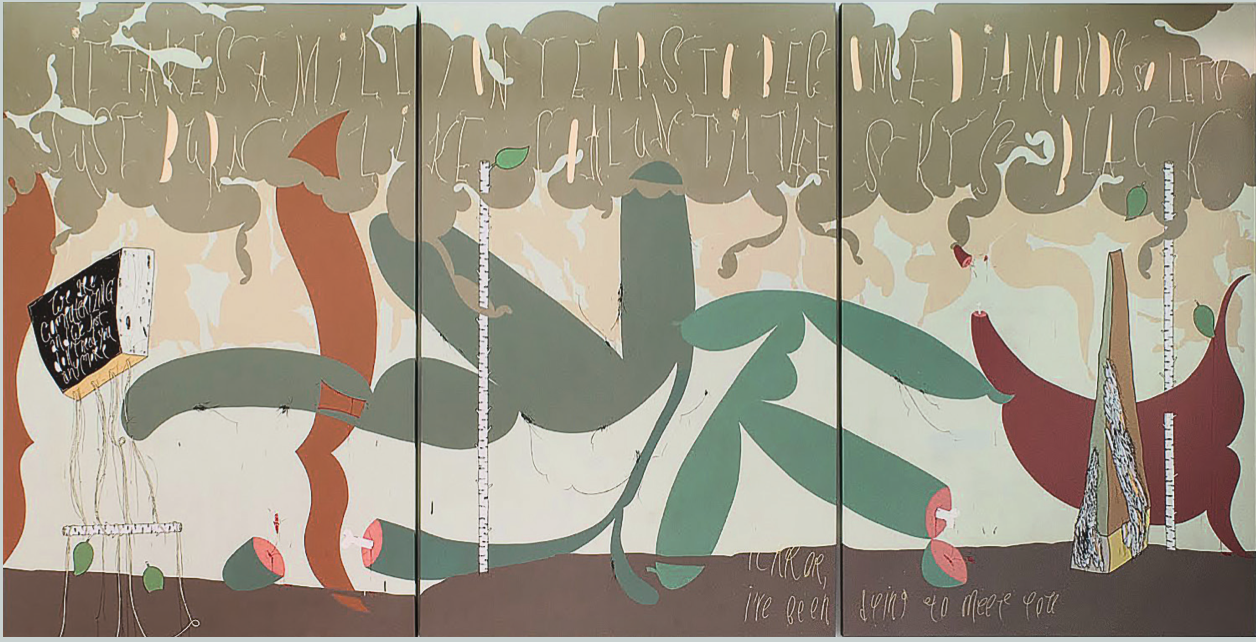
| 1998–2004 | Painting 2 (V. Skrepl) |
Jakub Hošek – a painter, DJ, and organizer of culture events – has always simultaneously pursued music and art. At the time of his graduation, he ran the AM 180 gallery, moderated his program at the commercial Óčko TV, broadcasted at Radio 1, and designed booklets for small publishing houses. He had already then arrived at a mature style, characteristic of brightly colored surfaces and sharp outlines, achieved via cutting subtle motifs out of a stick-on foil. He used it in his paintings but also graphic works for small independent music companies and designs for his gallery. He would also incorporate lyrics of his favorite songs into his paintings. These appear, for instance, in the 2002 series of chansons and his extensive diploma. It is entitled It Takes a Million Years To Become Diamonds So Let’s Just Burn like Coal until the Sky’s Black and its source of inspiration was the song performed by the American experimental rock group, Storm&Stress.
Magdalena Jetelová
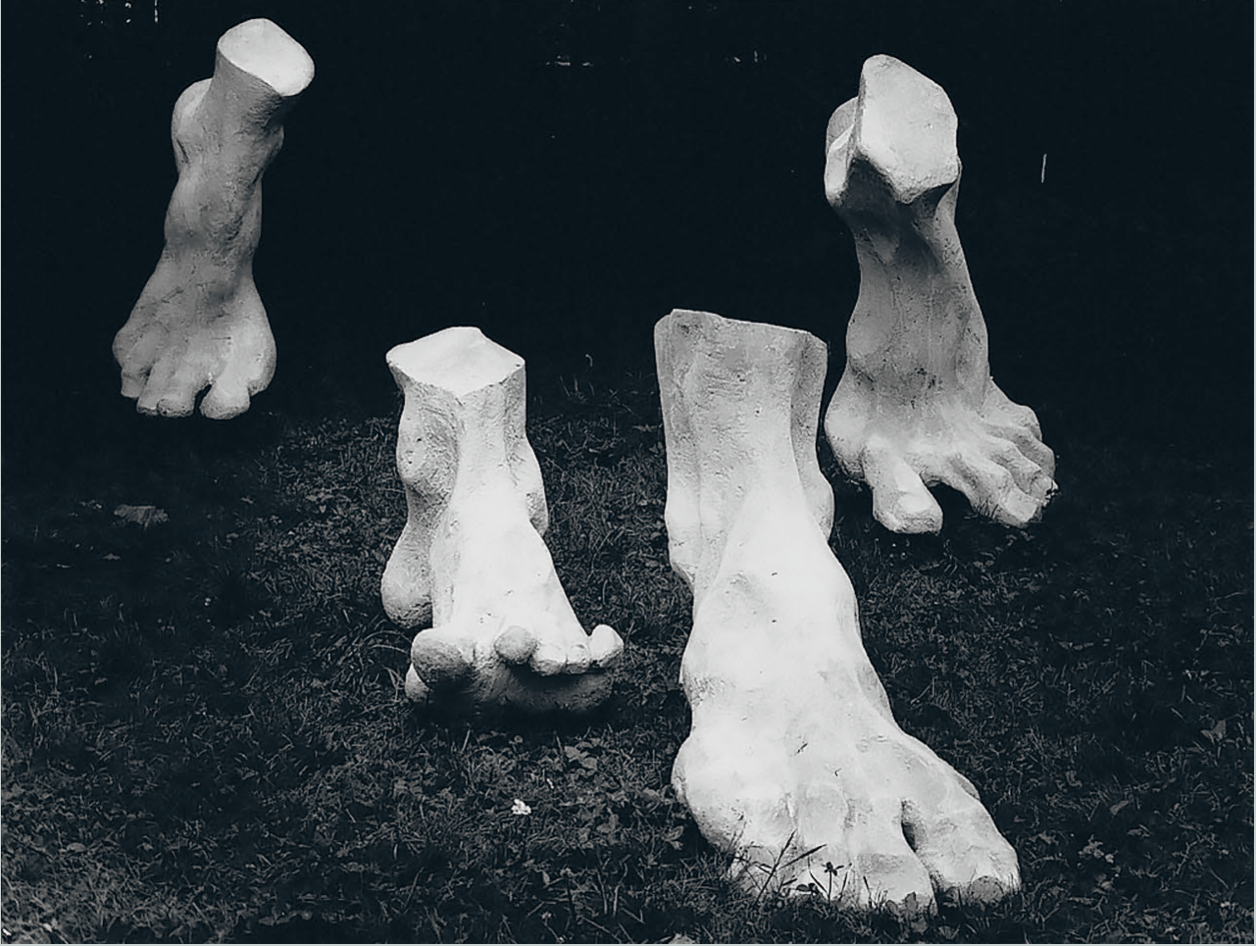
| 1965–1971 | Sculpture (K. Hladík, J. Bradáček) |
Magdalena Jetelová’s diploma – the monumental sculptural installation One Day – is today only known from a description and a small photograph. She executed it for an island on river Elbe near the city of Brandýs as an accompaniment to the local ecumenical church, designed by Antonín Jeníček, an architecture student at the Academy of Fine Arts. It was composed of two parts. The Expulsion from the Garden of Eden was four oversized soles of the feet of white cement, each 1.5 meters (!) high. They were derived from the famous Masaccio painting and should be situated in front of the church entrance. The Gate, made of the Hořice sandstone (while it is unclear if it is the one from the painting), was planned for the peak of the island.
Vladimír Kokolia
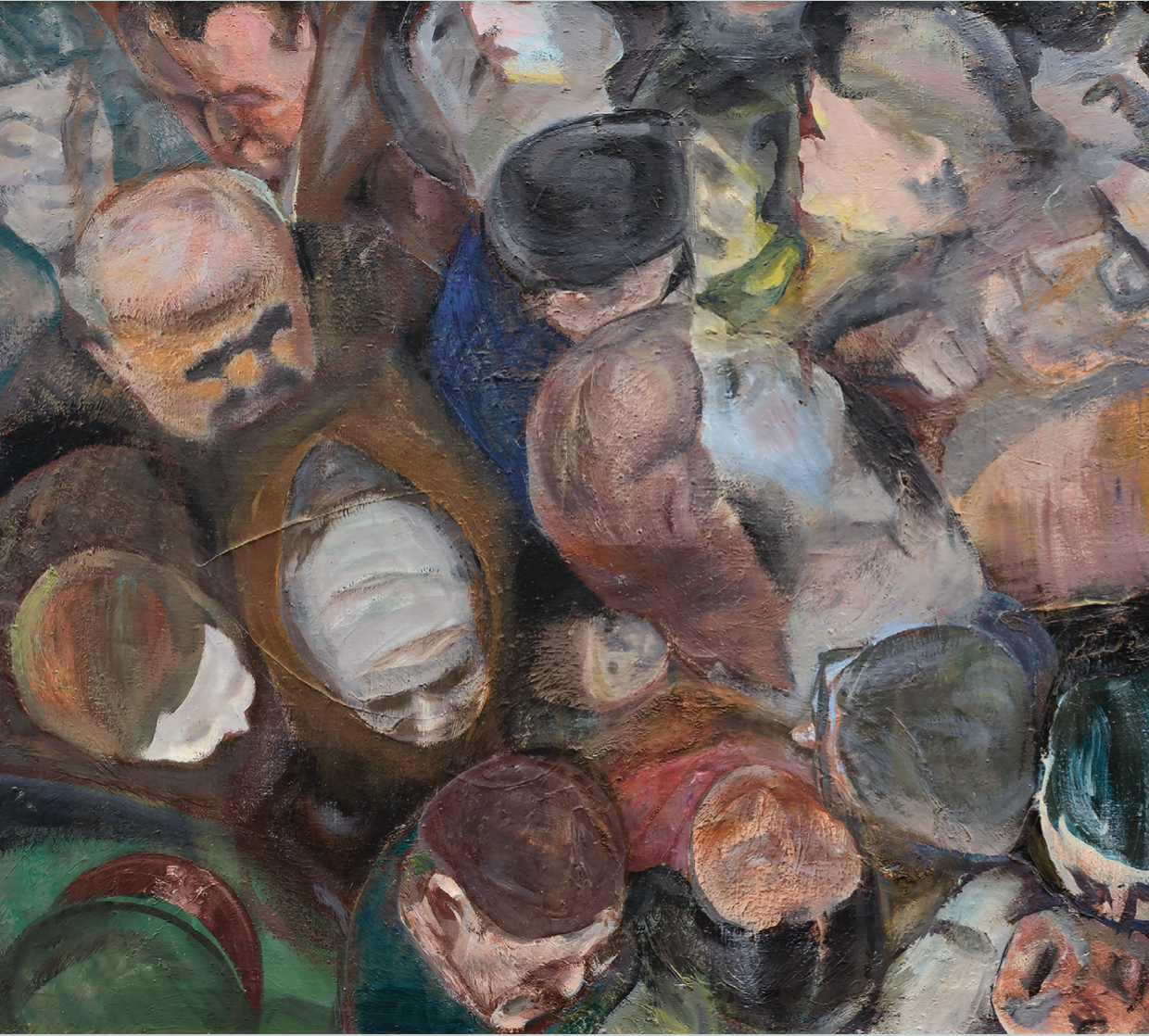
| 1975–1981 | Painting (J. Smetana) |
Vladimír Kokolia’s diploma consisted of two parts, entitled Our Family and Public Transportation. Shortly before, during his sojourn in Leningrad, he visited the Hermitage Museum and was deeply moved by the encounter with the works of the early-20th century modern art classics. Artists at that time solved similar problems that he formulated in his painting: related to reality and the way how our eye and brain perceive it. In his diploma, he pursued the elementary issues of representation – of space, crowd, motion, light, and so on. However, the paintings from the Public Transportation cycle were already then viewed as a hidden criticism of the local political regime. “But this was foreign to me. (…) I just painted people and spaces and the color between them; there was no criticism, neither toothless nor toothed.”
Marek Meduna
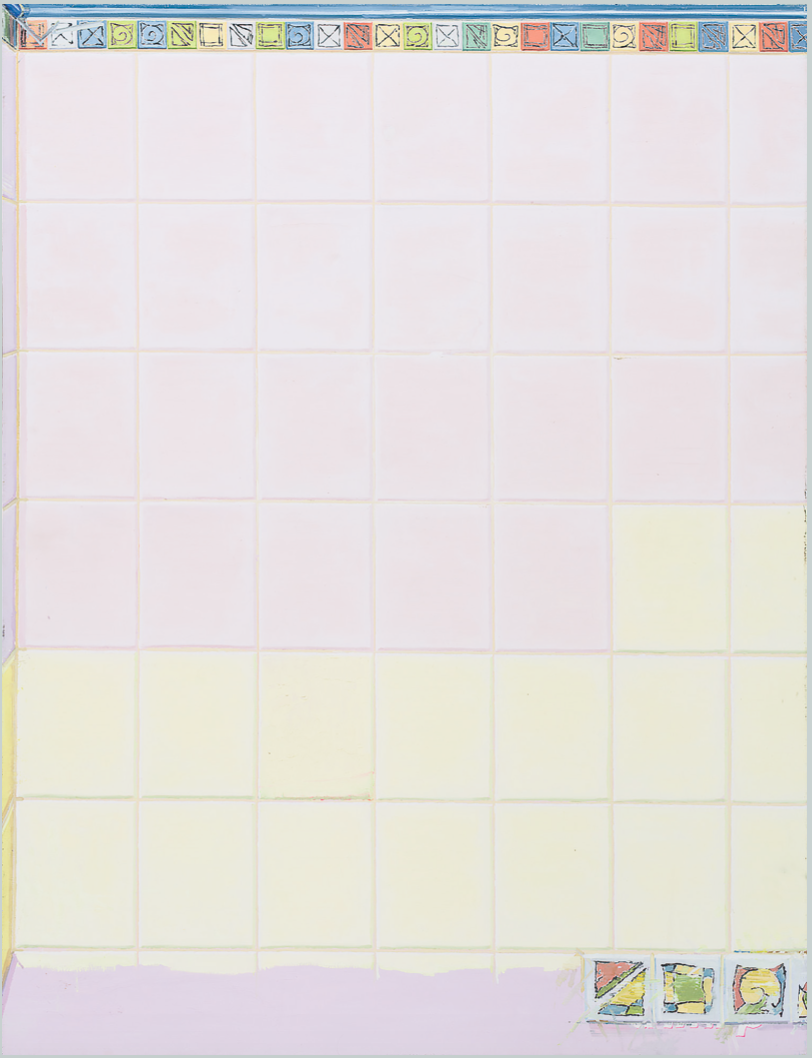
| 2004–2005 | Painting 2 (V. Skrepl) |
| 2002–2004 | Painting 3 (M. Rittstein) |
| 1999–2001 | Visual Communication (J. David, V. Skrepl, V. Bromová) |
The oeuvre of Marek Meduna, developed in many various me- dia, including painting, cannot be easily grasped by a summarizing depiction. Its unifying element is a conceptual approach and often direct working with language. Meduna arrived at this form as early as during his studies. However, the “concept” of his diploma paradoxically became the decision to create a series of paintings that would be “mere” paintings. They are interlinked by painterly form, which the artist at that time viewed as the diploma’s authentic contents. He even resolved to encompass several traditional painting genres at once, from still-life to portrait, landscape, etc. He depicted objects from his closest surrounding, as is the case of the canvas with the motif of tiles from his bathroom. This well proves one of the solved issues – illusive representation.
Petr Pavlík
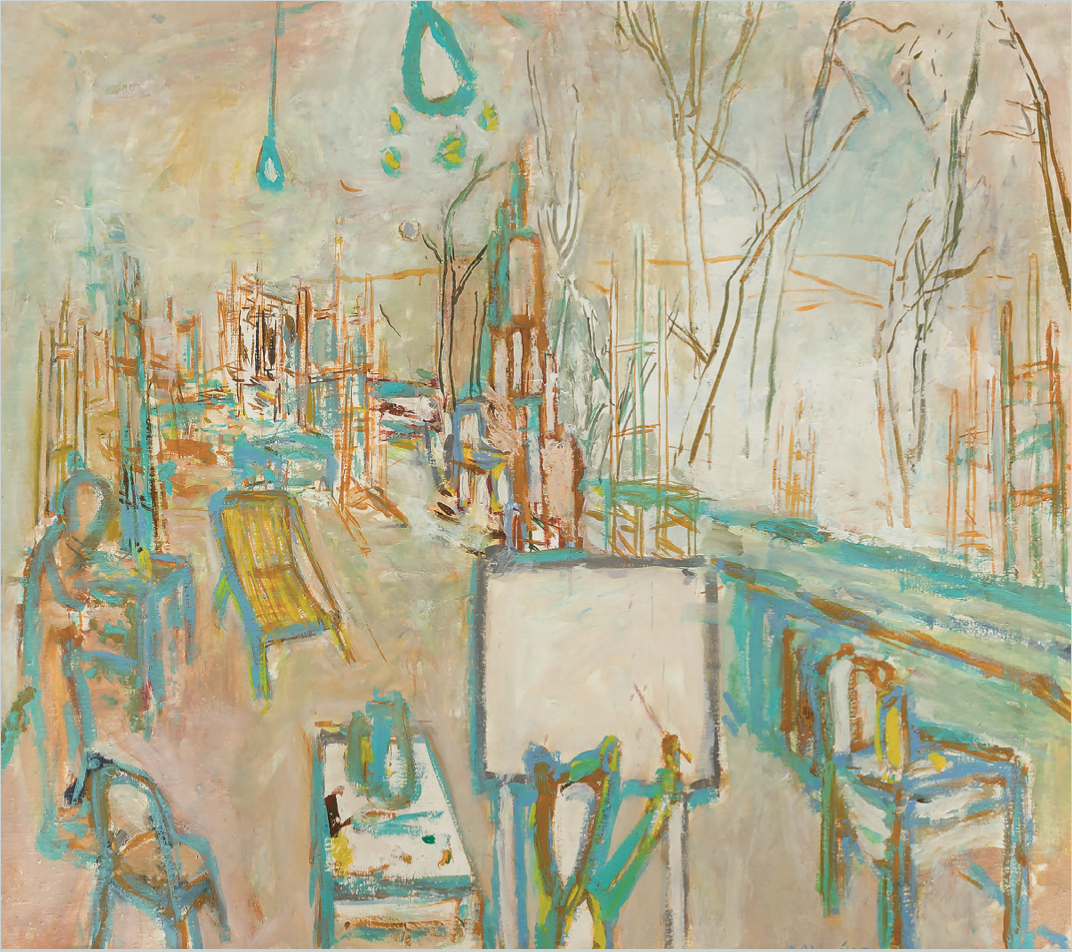
| 1967–1973 | Painting (F. Jiroudek, A. Paderlík) |
The structure of Pavlík’s diploma quite precisely reflects the atmosphere of the early years of the so-called normalization process in, what was then, Czechoslovakia. It echoes the fading liberal regime as well as the already inevitable, obligatory “libation” so that Professor Paderlík, heading the studio, was safe from potential political troubles. Pavlík thus had to execute the assigned, conventionalist work for architecture, but at the same time created a series of canvases representing his school studio inhabited by easels and other painting tools, which evoke an impression of absolute freedom. These works contain all the essential features of Pavlík’s later style: a drawing nature and a specific color scheme, interest in the space of a painting, and especially the bizarre figure of the artist’s alter ego, cat-man – some initial stage of his more recent Pilgrims. The canvas brings a topical, grotesque component into compositions otherwise created in a rather conservative style and the spirit of late Modernism.
Michael Rittstein
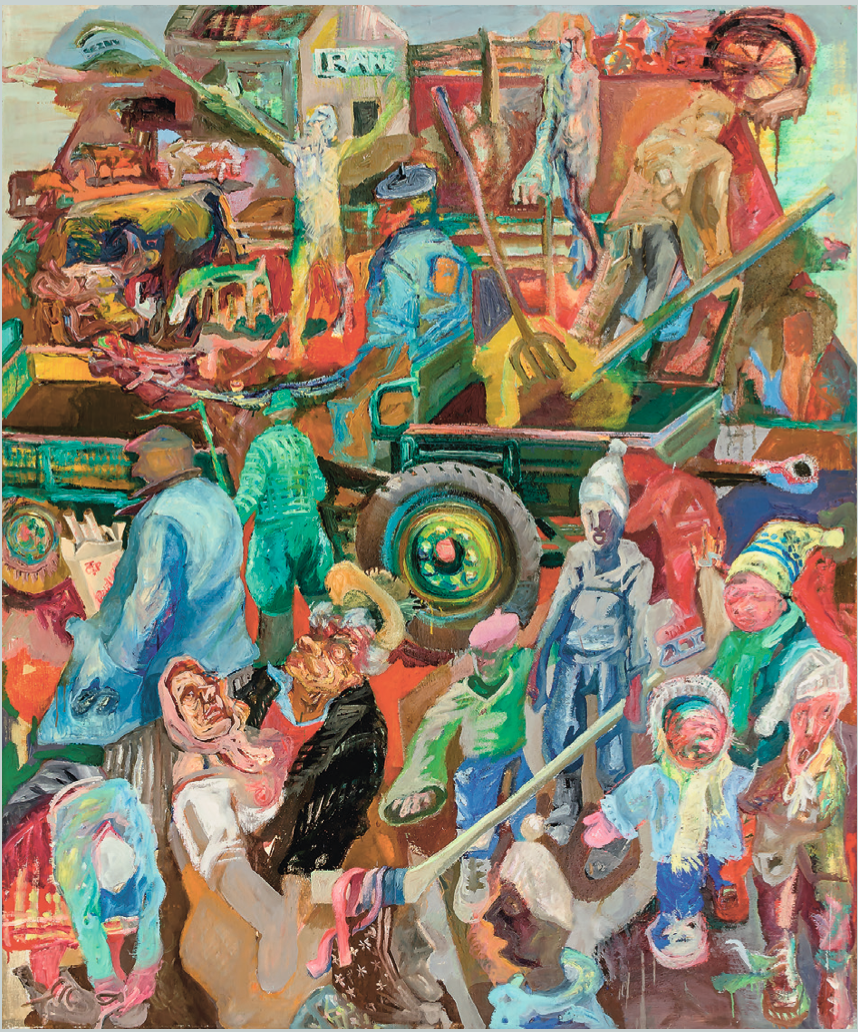
| 1968–1974 | Painting (A. Paderlík) |
The subject of Rittstein ́s diploma became the village of Brnířov nearby Kdyně. It was about a year before he accidentally discovered that the countryside might liberate him from the excessive literariness present in his hitherto oeuvre. It showed up that featuring a “work environment” would comply with the requirement of his studio’s head, Professor Paderlík, to follow the then-obligatory engaged character of a diploma. Rittstein achieved this by a cycle devoted to the local agricultural cooperative. However, his paintings are all but a glorification of a socialist village. Just the contrary: the accumulation of specific motifs and the grotesque tone follow Pieter Brueghel the Elder and his genre scenes from the Netherlandish provinces. The paintings betray the essential features of the artist’s ex- pression gradually developed in the following years: exaggerated perspective deforming bodies, caricature treatment of faces, and, especially, the animal dimension of everyday life, which the artist later came to call “the local tale”.
Kateřina Šedá
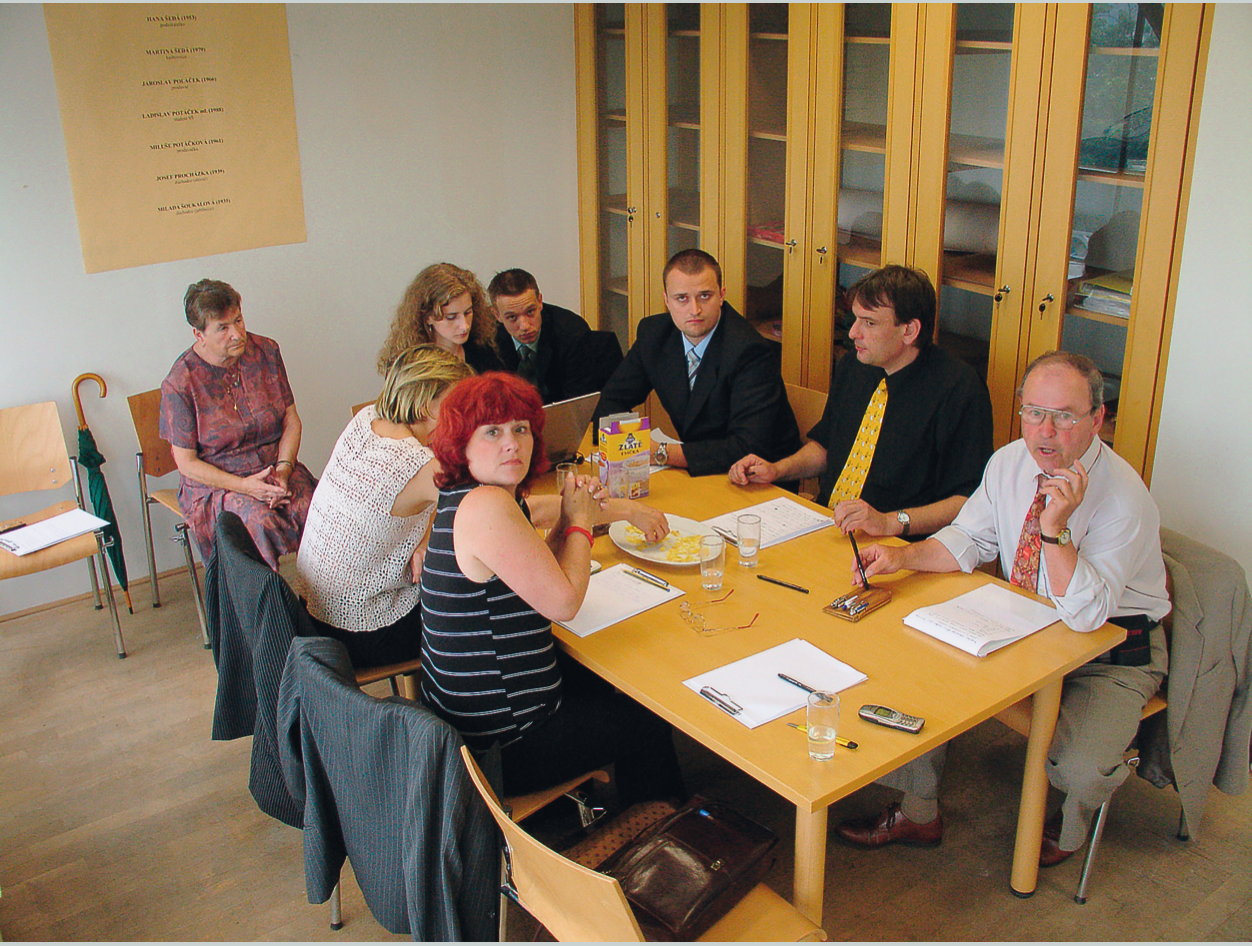
| 1999–2005 | Printmaking (V. Kokolia) |
Kateřina Šedá’s outstanding diploma deals with an issue which the artist later elaborated on in several extensive events: the gap between the self-centered art scene and the world of “ordinary people” who are, in the majority, indifferent to contemporary art and mock it at most. Her subject is the specific format of a diploma or, respectively, the process of defending it. She set up an alter- native committee of her family members entirely disengaged from contemporary art, and let them judge twelve diplomas mainly from the field of New Media right before the official procedure. The fake event contained passing an oral exam, a graduates’ discussion with the board, and producing a final survey. The pseudo-committee eventually also assessed the project of the artist.
Dalibor Smutný
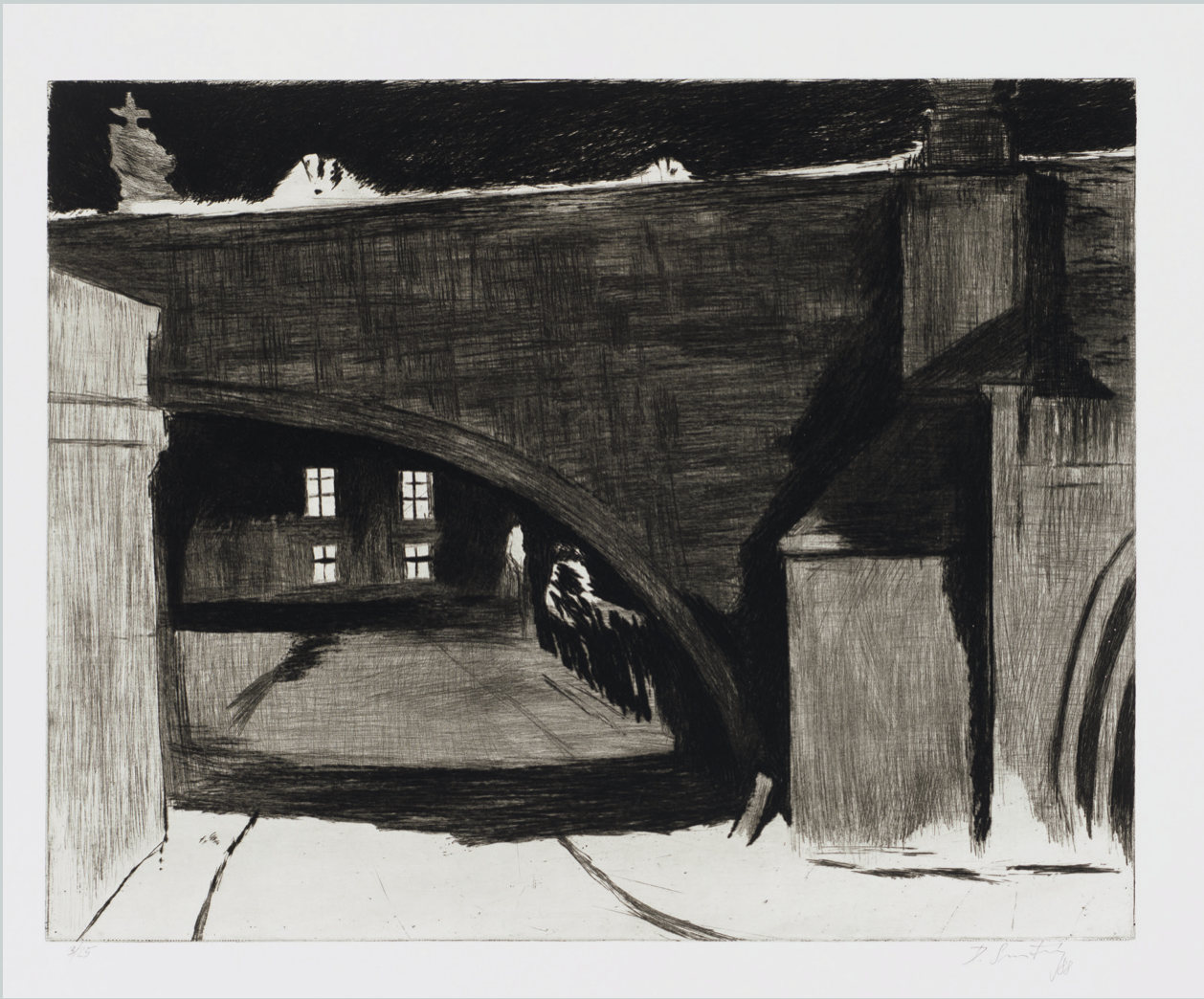
| 1982–1988 | Printmaking (L. Čepelák) |
Dalibor Smutný’s diploma is the cycle entitled Prague Vistas. It consists of four graphic sheets (Charles Bridge, The New World, St Vitus Cathedral, and Strossmayer Square), executed in the classical gravure technique of dry point. The artist mainly wished to faithfully portray the beauty and perfection of old architecture and the night lights of Prague. He tried to capture the plasticity of the architectonic morphology and underline its symbolic via layered hatching, hence expressing the vast scale of soft hues, from sharp light to almost absolute shadow.
Petr Veselý
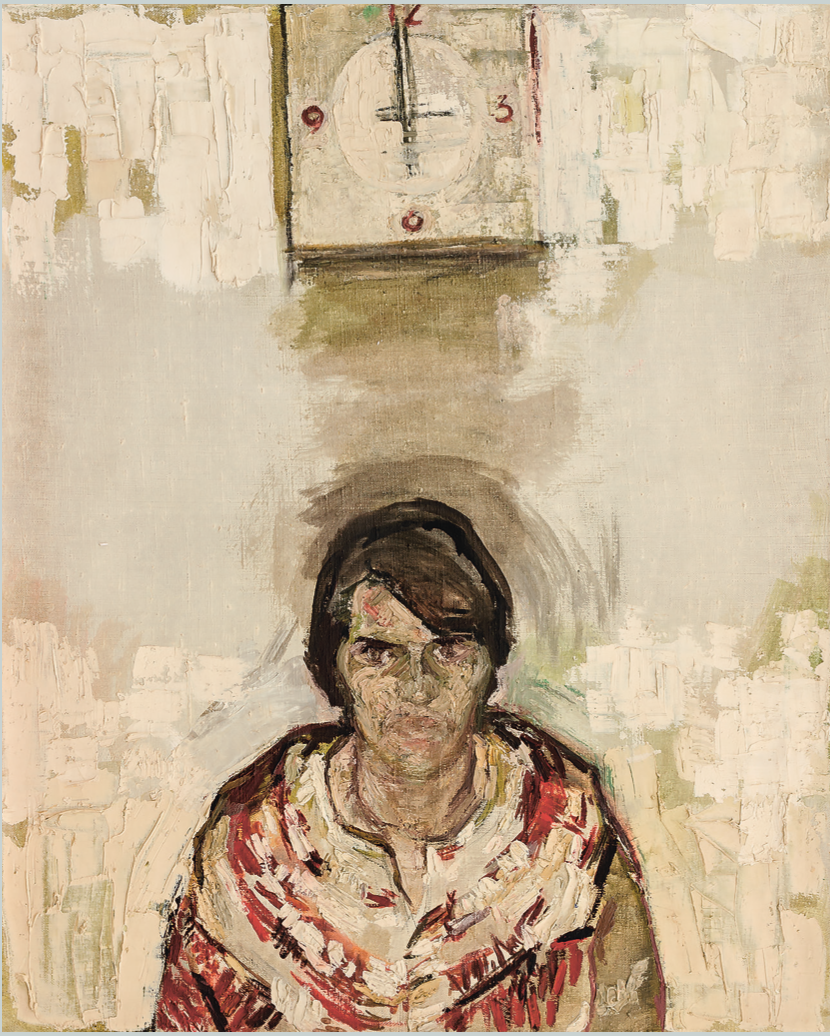
| 1973–1979 | Painting (J. Smetana) |
One of the significant threads meandering through the oeuvre of Petr Veselý is his deep relation to the place of his family’s origination, where he was born and where he has lived to this day – the old smithy in Jundrov at the Brno periphery. He devoted his diploma to the same subject. It is several canvases picturing the local garden and the people close to him: his wife and disabled uncle. He portrays them in the house, which is present via its realia, such as a window and a wall clock. Some passages already signal Veselý’s later painting style and his characteristic color palette. Its dim hues with the prevalence of grey and white are accompanied by bright red, which almost became a recognition sign of his work.
Josef Žáček
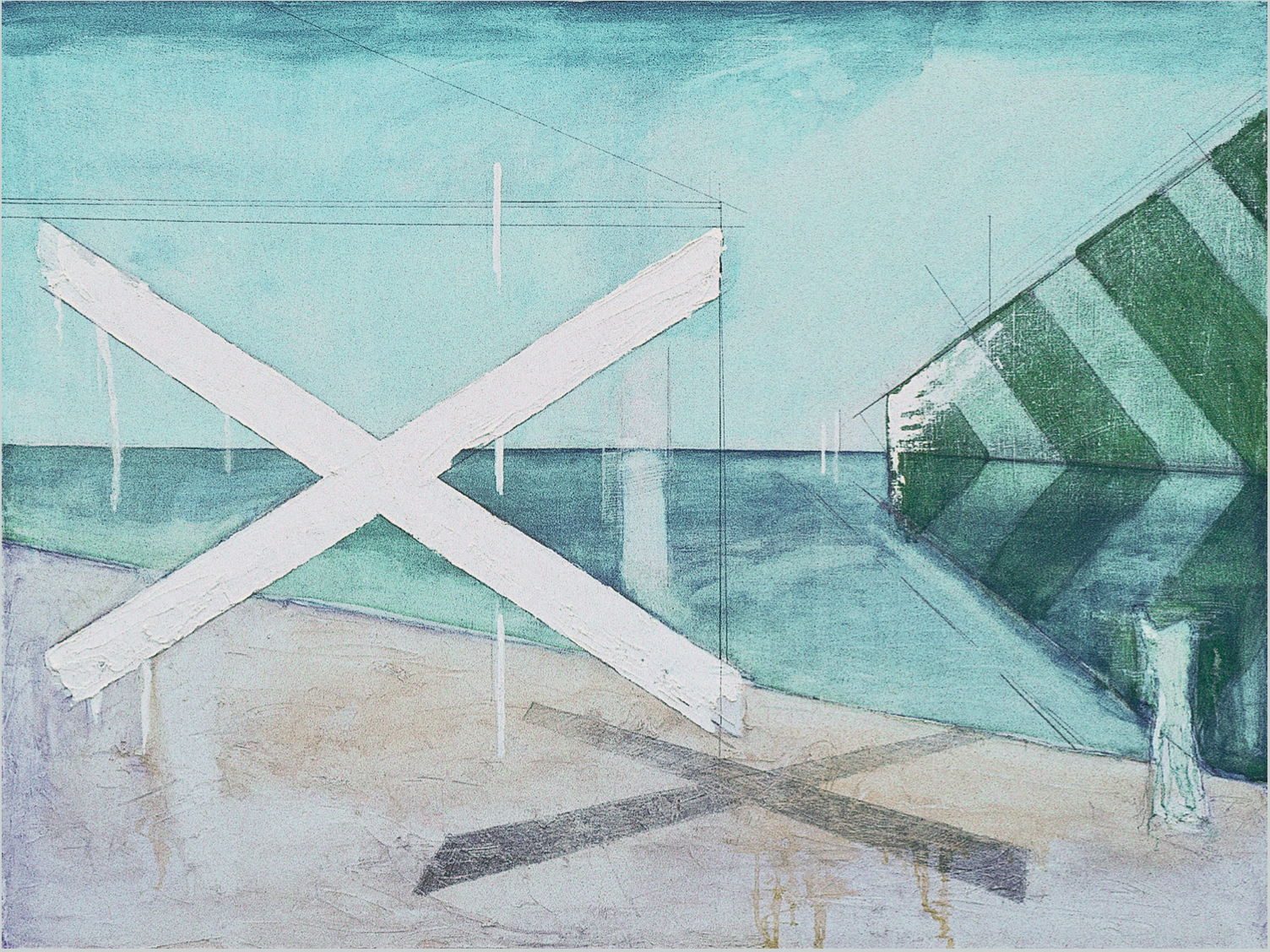
| 1977–1983 | Painting (O. Oplt) |
The oil paintings of imaginary landscapes fall into Žáček’s oeuvre as early and yet already es- tablished style (after all, the artist graduated from the Academy at the rather late age of 32). The works are imaginary scenes from sea landscapes, of both metaphysical and phantom character. They are based on a delineated construction that highlights spatial perspective, and on the watery painting of light hues, expressing the air perspective. An important role also belongs to abstract signs, derived from an industrial environment. The artist here presents a complex play: what should be real – the landscape – is conceived as unreal and illusive. And on the contrary, the signs, immaterial in their essence, look like real objects: one reflects itself on the water surface, while the other one casts a shadow.